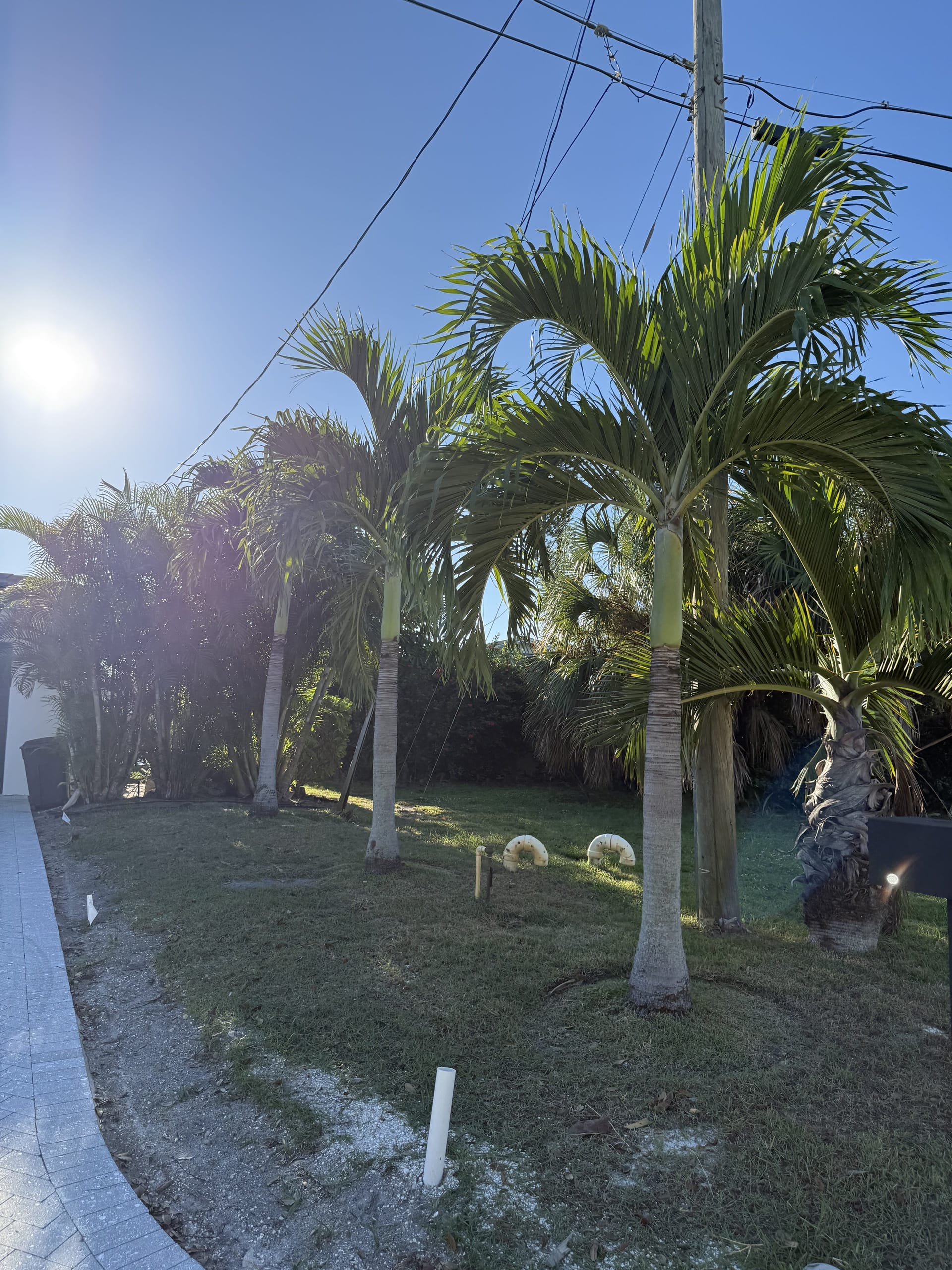
Holding the Line: Protecting Your Shoreline from Erosion
Waterfront yards lose soil a little at a time — until seawalls gap, roots expose, and the lawn starts disappearing after every storm. Here's how grading, plantings, and drainage work together to stop it.
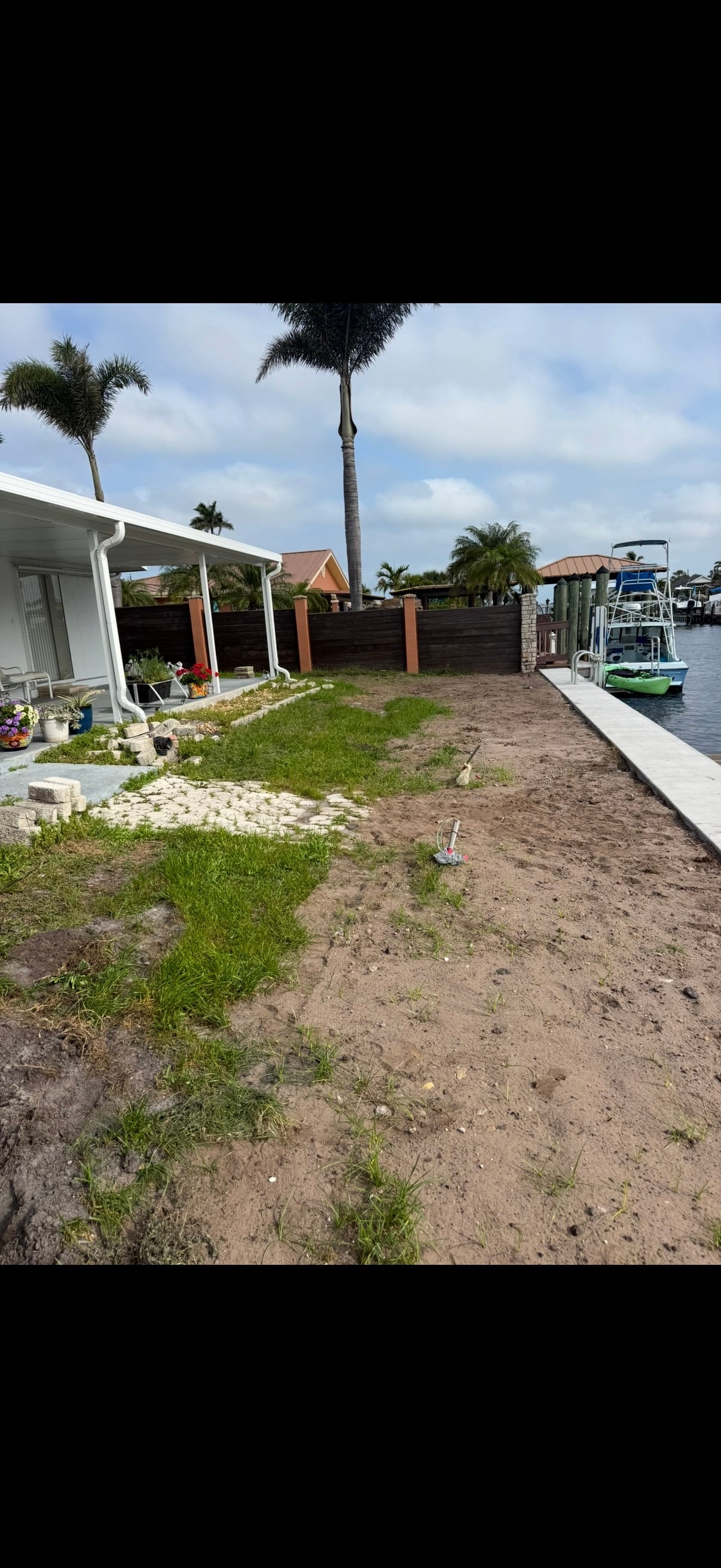
Erosion on a Sarasota waterfront property rarely announces itself. There's no dramatic collapse — just a little soil moving with every rain, every tide, every irrigation cycle. Then one season you notice the seawall footings exposed, tree roots bare, and a strip of lawn that used to be three feet wide is gone. The good news: caught early, almost all of it is fixable without heavy construction.
Learn to read the early signs
Walk your seawall line and shoreline after a heavy rain. Look for soil piled at the base of the wall (it came from somewhere), gullies cutting back from the lawn, exposed roots, and mulch migrating toward the water. Inside the yard, downspout outlets that have dug small craters and fence lines where the ground sits lower on one side than the other tell you exactly where water is winning. Every one of those is a clue about where the soil is leaving and how.
Grade first, plant second
The instinct is to buy plants; the first move is actually grading. Soil should slope gently away from the house and, along a seawall, sit at a stable angle rather than a cliff. We regrade problem areas to slow water down — because erosion isn't caused by water, it's caused by water moving fast. A slope that's too steep sheds everything; a gentle, terraced slope soaks it in.
Let roots do the engineering
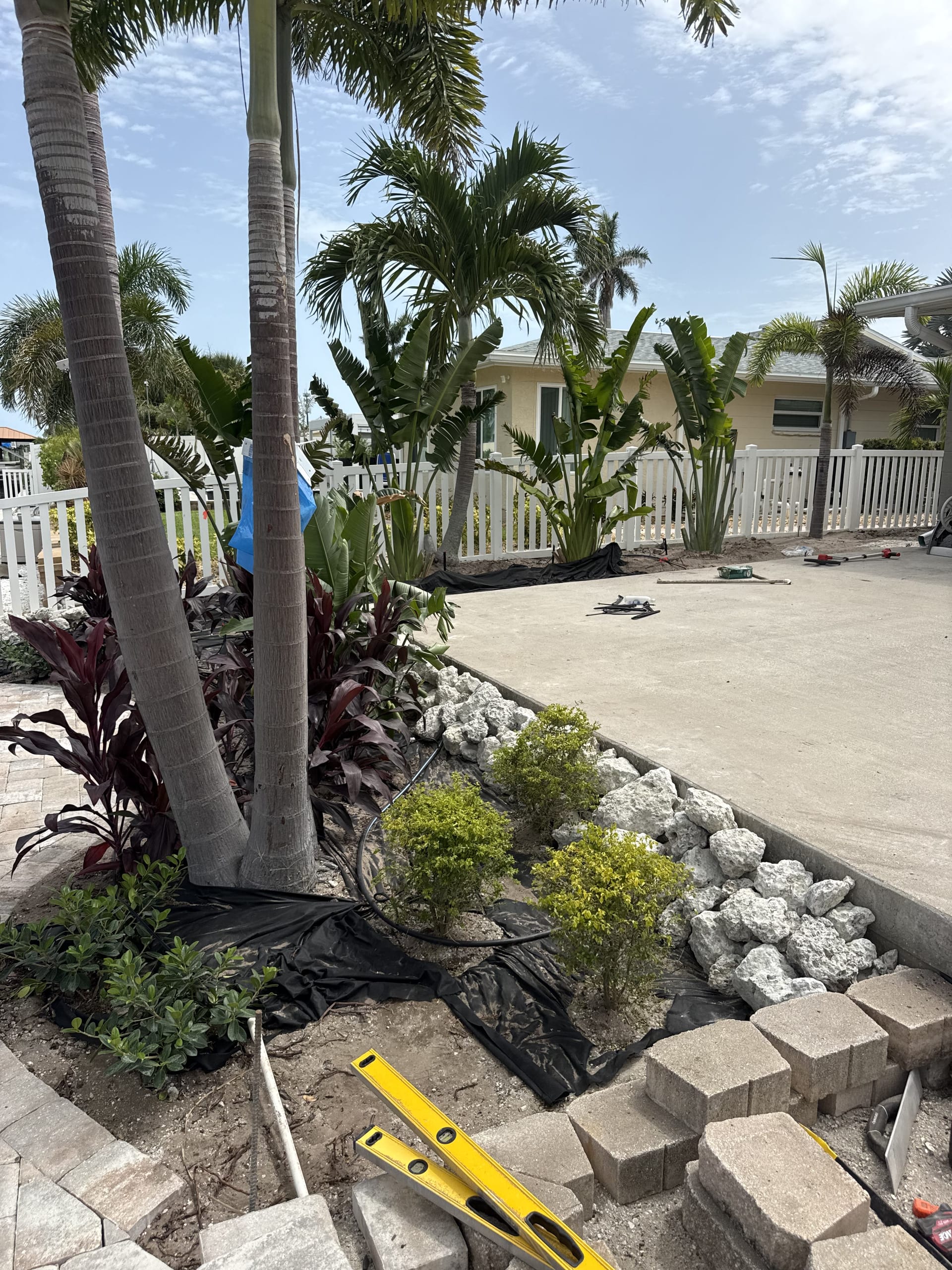
Plants are the long-term reinforcement. Deep-rooted grasses and native shoreline species knit the soil together with roots that hold far better than any fabric roll. On seawall-adjacent beds we use tough, salt-tolerant plantings that thrive in the splash zone and slow wave wash-out. The layering principle from garden design applies here too: canopy, mid-level, and groundcover working together shade the soil, break rainfall impact, and hold the bank.
Fix the water before it arrives
Half of residential erosion is self-inflicted by roof runoff. A single downspout can deliver hundreds of gallons in one storm, straight onto vulnerable soil. Extending downspouts into lawn or beds, adding splash blocks, or tying into a proper drain line removes the single biggest erosion source on most properties. It's often the cheapest fix on the whole list.
When the seawall itself needs attention
Gaps between seawall panels, soil voids behind the wall, or weep holes clogged and weeping mud are signs the wall's drainage system is struggling. Some fixes are landscaping-scale — backfilling and planting the landward side. Others need a marine contractor first and a landscaper second. We'll always tell you honestly which situation you're in; planting over a failing wall just hides the problem for a season.
Maintenance is the real erosion control
Shoreline landscapes aren't install-and-forget. Mulch migrates, channels re-form, and plants need a season or two to root in fully. A quick walk after the big summer storms each year — checking the same spots, looking for the same clues — keeps small problems small.
Watching your shoreline wash away?
We handle grading, drainage, and erosion-control plantings for seawall-adjacent and waterfront properties across Sarasota.
Request a Quote