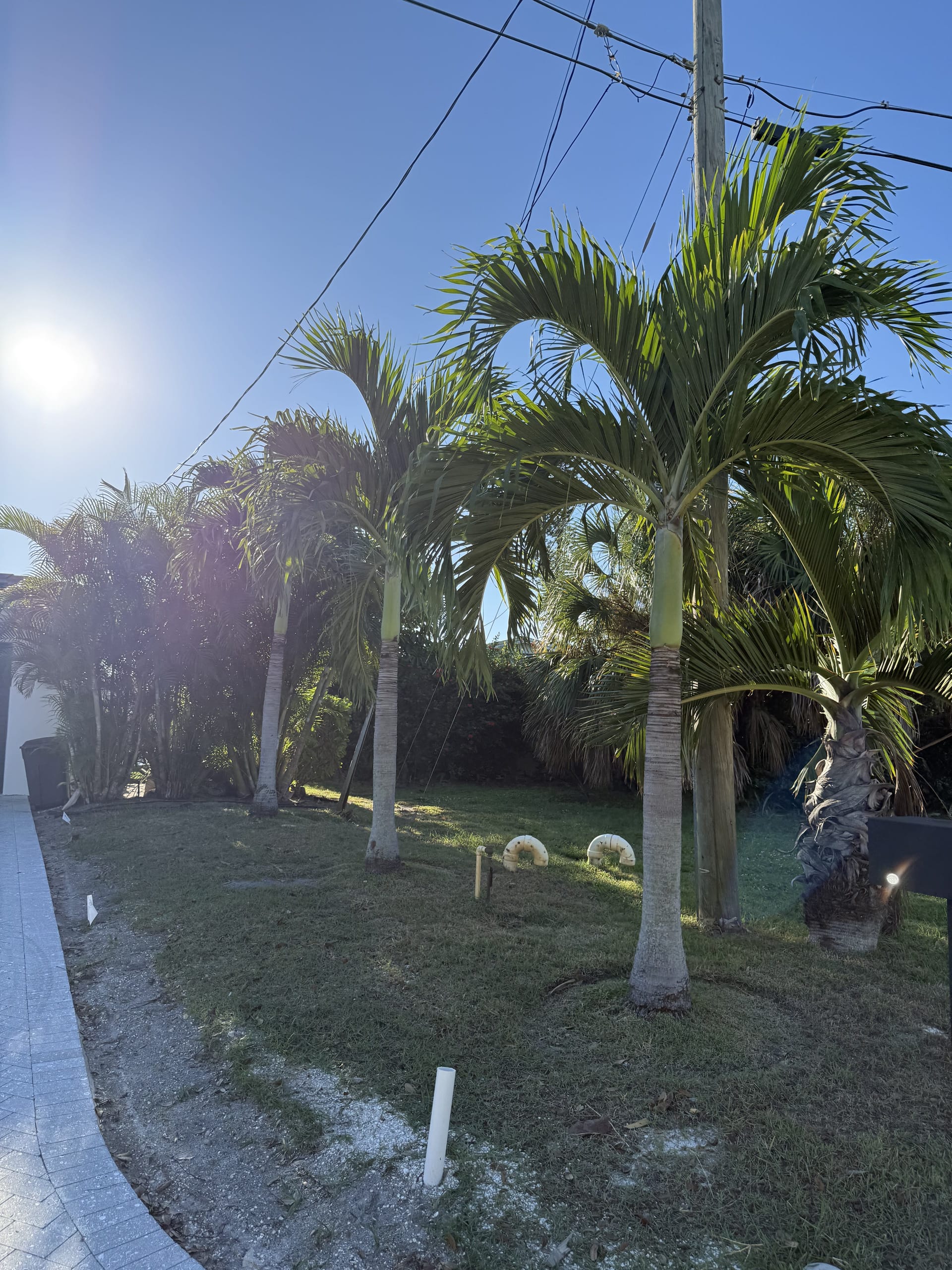
The Five Layers of a Thriving Tropical Garden Bed
The best tropical beds are built in layers, not rows. Here's how we stack heights, textures, and colors so a bed looks full the day it goes in — and better every month after.
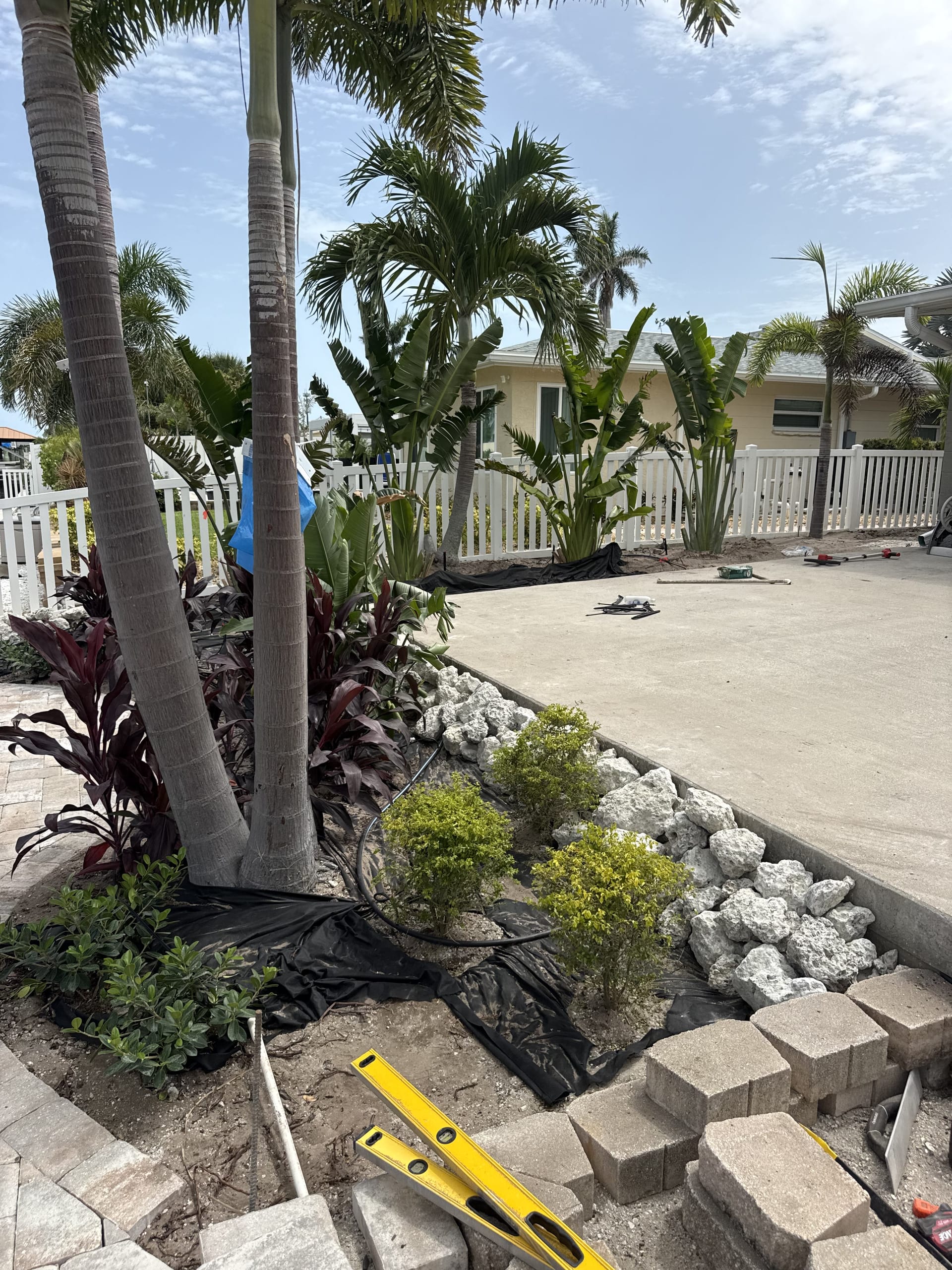
A flat bed of shrubs lined up along a wall is the most common planting mistake we see in Sarasota — and the easiest one to fix. Tropical gardens in South Florida look lush for a reason: in nature, nothing grows in a single line. Everything stacks. Copy that structure and even a modest bed reads as rich and established. Here are the five layers we use on every design.
Layer 1: The canopy
This is the tallest element — a small palm, a standard podocarpus, or an existing tree the bed wraps around. The canopy sets the silhouette and gives the eye a place to land first. It also creates the dappled shade that the layers below will thank you for. Rule of thumb: the canopy should be at least one and a half times the height of everything else in the bed, or the layering flattens out.
Layer 2: The accent
One or two bold, sculptural plants — elephant ears are our favorite — placed off-center where they catch light. Accents are the exclamation points of the bed. The mistake to avoid is quantity: the moment you have five "focal points," you have none. One dramatic clump of giant elephant ears leaning out over a bed edge does more than a dozen mid-sized plants ever will.
Layer 3: The color
This is where crotons and lobster claw (heliconia) earn their keep. Crotons bring yellow, orange, and red into the bed year-round in Sarasota's climate; lobster claw adds height, structure, and those unmistakable bracts that hummingbirds can't resist. We cluster color plants in drifts of three or five — odd numbers, staggered depths — so the color reads as intentional rather than confetti.
Layer 4: The body
The body is the quiet middle of the bed: podocarpus, dwarf ixora, or similar mid-height evergreens that tie the showy plants together and keep the bed looking full in winter when the color plants take a breath. Think of this layer as the wall behind the artwork. It's rarely the plant anyone asks about by name, and that's exactly the point.
Layer 5: The ground
Low spreaders and a fresh layer of mulch finish the bed. Groundcover knits the bed to the lawn so there's no bare "skirt" at the bottom, and mulch keeps the roots cool, holds moisture through our dry spring weeks, and suppresses the weeds that would otherwise announce themselves within a month. Keep mulch a couple of inches thick, but pull it back from stems and trunks so nothing rots.
Two habits that keep layers healthy
First, space for the plant's mature size, not its nursery size. A bed that looks slightly airy at installation fills in beautifully; a bed crammed full on day one becomes a pruning war by summer. Second, group plants by water need. Putting a thirsty heliconia on the same drip line as a drought-happy podocarpus guarantees one of them is always unhappy.
Want a bed designed in layers, not rows?
We draw planting legends with exact varieties, quantities, and spacing before a single shovel hits the sand.
Request a Quote