Choosing Palm Trees That Thrive in Sarasota
Not every palm handles Sarasota's sandy soil, salt air, and the occasional cold snap. Here are the varieties we plant again and again — and the ones we leave at the nursery.
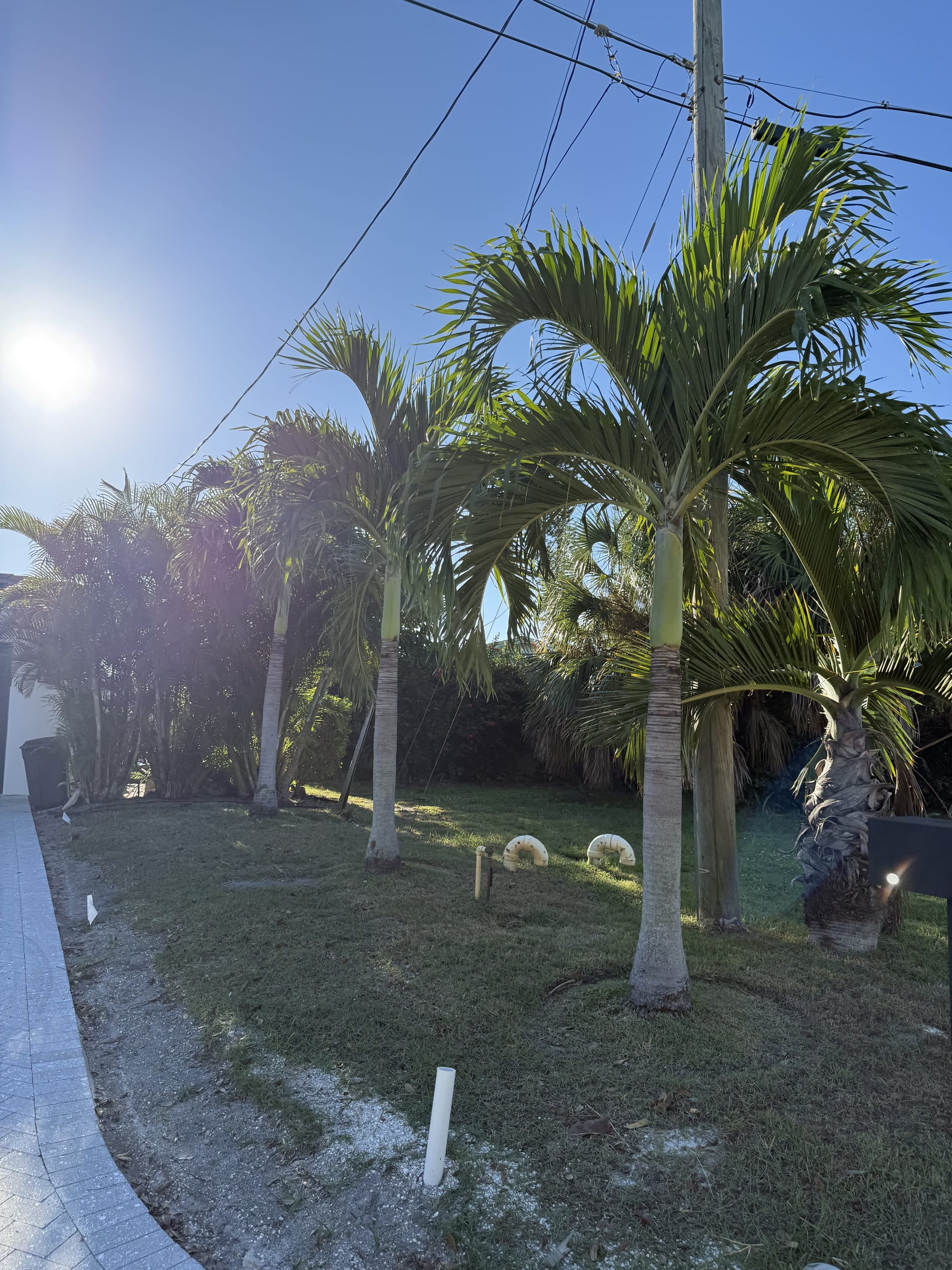
Drive through any Sarasota neighborhood and you'll spot palms that look effortless — and a few that look like they've been struggling for years. The difference is rarely luck. Palms fail for predictable reasons: the wrong species for the site, planted too deep, or watered like a seasonal annual instead of the long-term investment it is.
Start with the site, not the palm
Before we talk varieties, look at your yard honestly. How close is the planting spot to the house, the pool, or the seawall? Is it full sun or dappled shade under an oak? Is the soil pure sugar sand, or has it been built up with fill over the years? Salt spray is another quiet filter — a canal-front yard punishes salt-sensitive species that would sail through a landlocked lot a mile inland.
Answer those four questions first and the list of palms that will actually thrive on your property gets short fast. That's a good thing. It means the choice is real, not a coin flip.
The palms we plant again and again
Foxtail palm (Wodyetia bifurcata). The workhorse of modern Sarasota front yards. Fast, symmetrical, and full to the ground when young, it gives a finished look the day it's installed. It wants full sun and good drainage, and it delivers a soft, feathery canopy that reads "tropical" without reading "overgrown."
Canary Island date palm (Phoenix canariensis). The statement piece. A broad, dramatic crown on a thick pineapple-cut trunk — nothing else frames a driveway or a waterfront elevation quite like it. It's heavier and slower, which is exactly why we treat it as the anchor of a design rather than a filler.
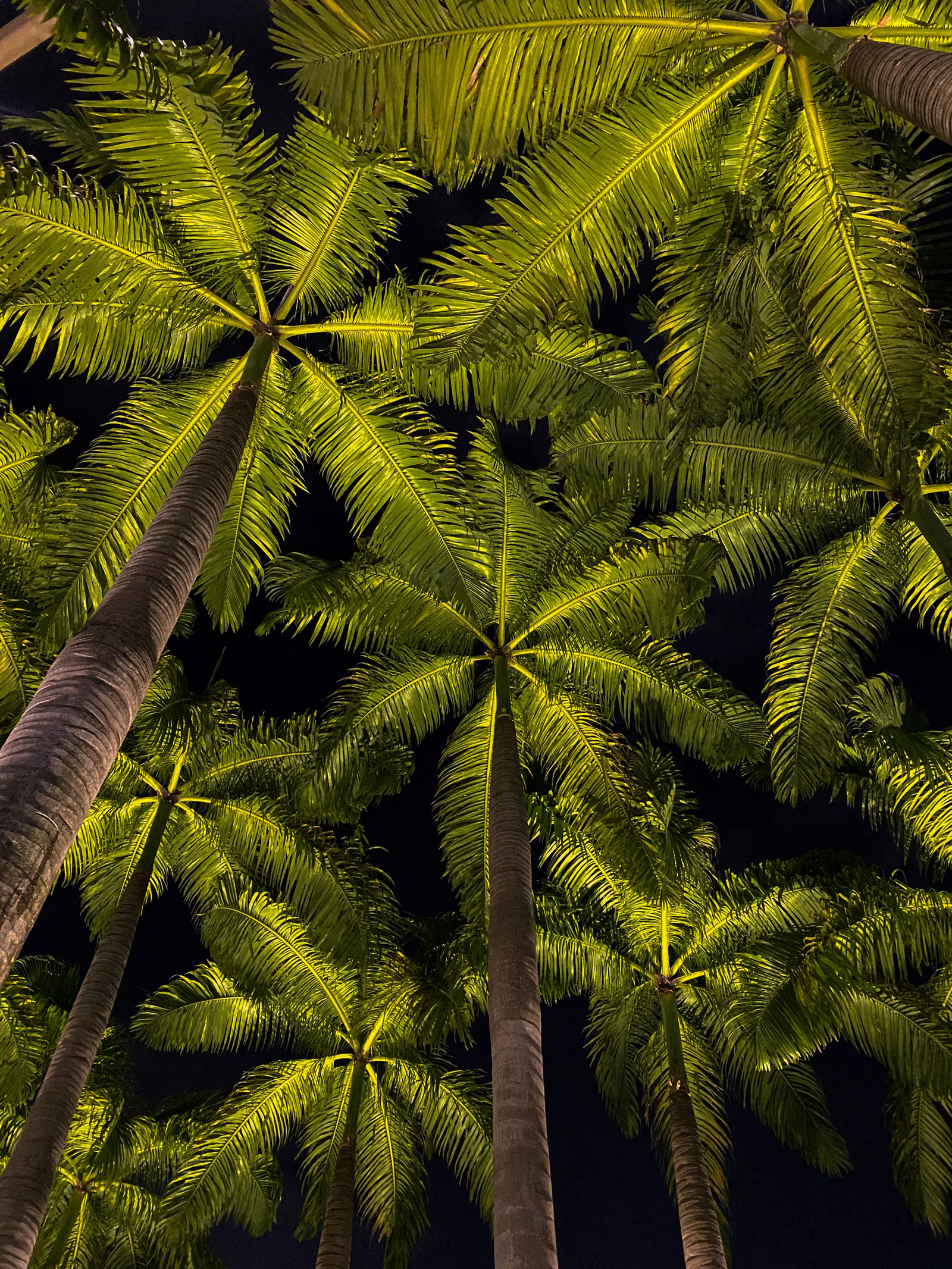
Sylvester palm (Phoenix sylvestris). A close cousin of the Canary with a neater silhouette and that signature diamond-pattern trunk as it matures. It handles our heat without complaint and pairs beautifully with uplighting.
Areca and sabal palms. For screening and native character, respectively. Areca clumps make an excellent living privacy wall along a property line; the sabal (our Florida state tree) shrugs off storms and neglect better than almost anything else we plant.
The ones we talk clients out of
Every installer has a short list of palms that look great in a nursery pot and disappointing in the ground. Queen palms struggle in our alkaline, sandy soil and show chronic frond deficiencies without a strict feeding program. Mexican fan palms get tall fast and then fight with roofs and power lines. And anything sold as "instant jungle" in a five-gallon pot usually means a root-bound palm that never anchors properly. If a palm's only virtue is a low price, it usually isn't.
Planting depth and first-year care
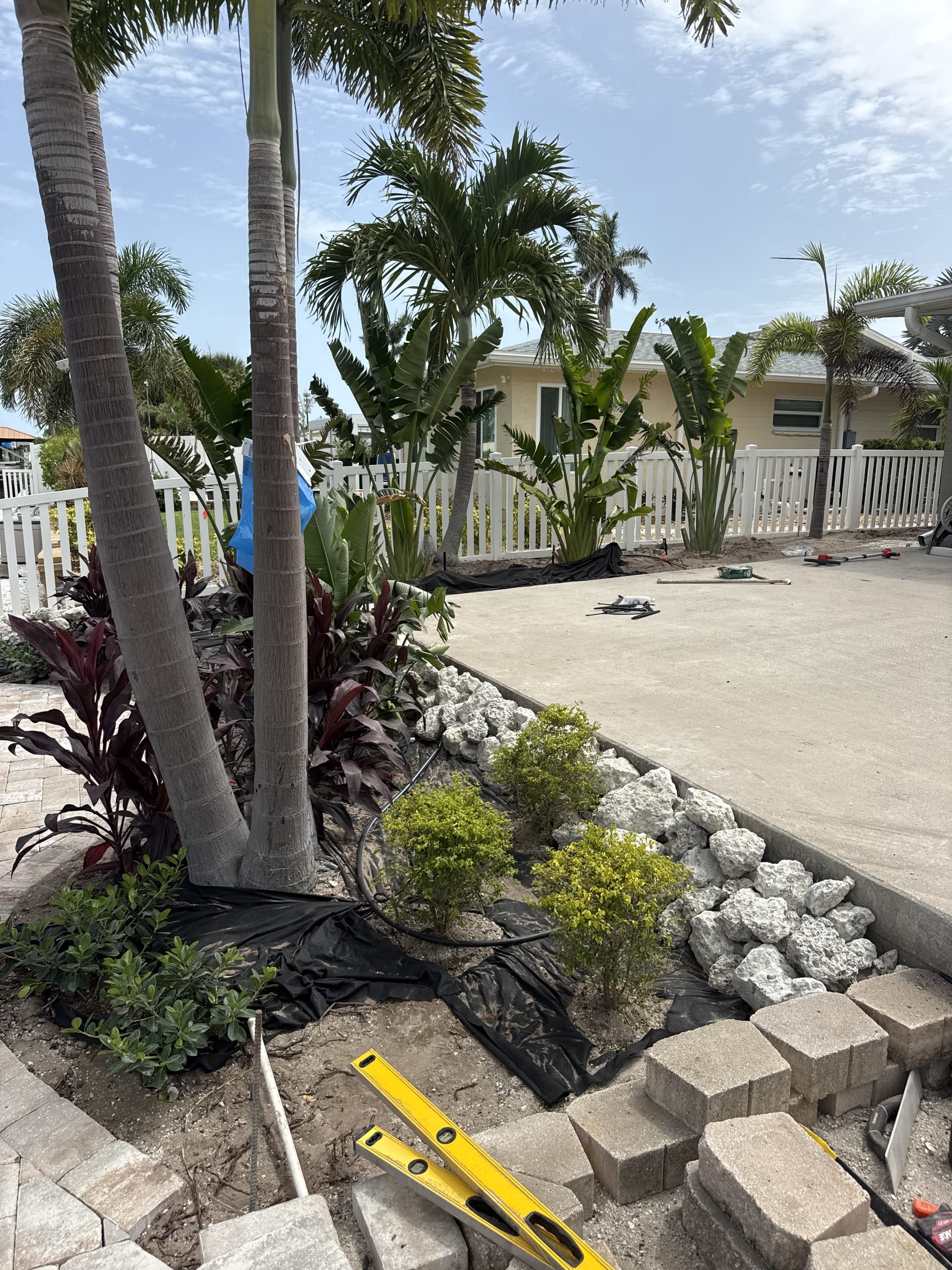
The single most common killer of otherwise healthy palms is planting them too deep. A palm's trunk base should sit at, or barely above, the surrounding grade — bury it and the trunk slowly rots while the fronds yellow for reasons nobody can figure out. We set every root ball on undisturbed, compacted soil so the palm settles with the ground instead of into it.
After that, the first year is about water discipline: deep, infrequent soakings that push roots down, not daily sprinkles that keep them shallow. A ring of mulch a few inches thick — kept off the trunk itself — holds moisture and keeps the string trimmer away from the bark. Get the first year right and the palm essentially takes care of itself from year two on.
One last tip: plant in odd numbers
Palms look best in groups of three or five at staggered heights, framing the house rather than marching across it in a row. It's a small design habit that separates a yard that was planted from a yard that was designed.
Not sure which palm fits your yard?
We'll walk your property, check the sun, soil, and salt exposure, and recommend palms that will still look great in ten years.
Request a Quote