Paver Driveways in Coastal Florida: What to Know Before You Build
A paver driveway is one of the biggest visual upgrades a Sarasota home can get — and one of the easiest to get wrong. Here's what separates a driveway that lasts from one that settles, shifts, and weeds through.
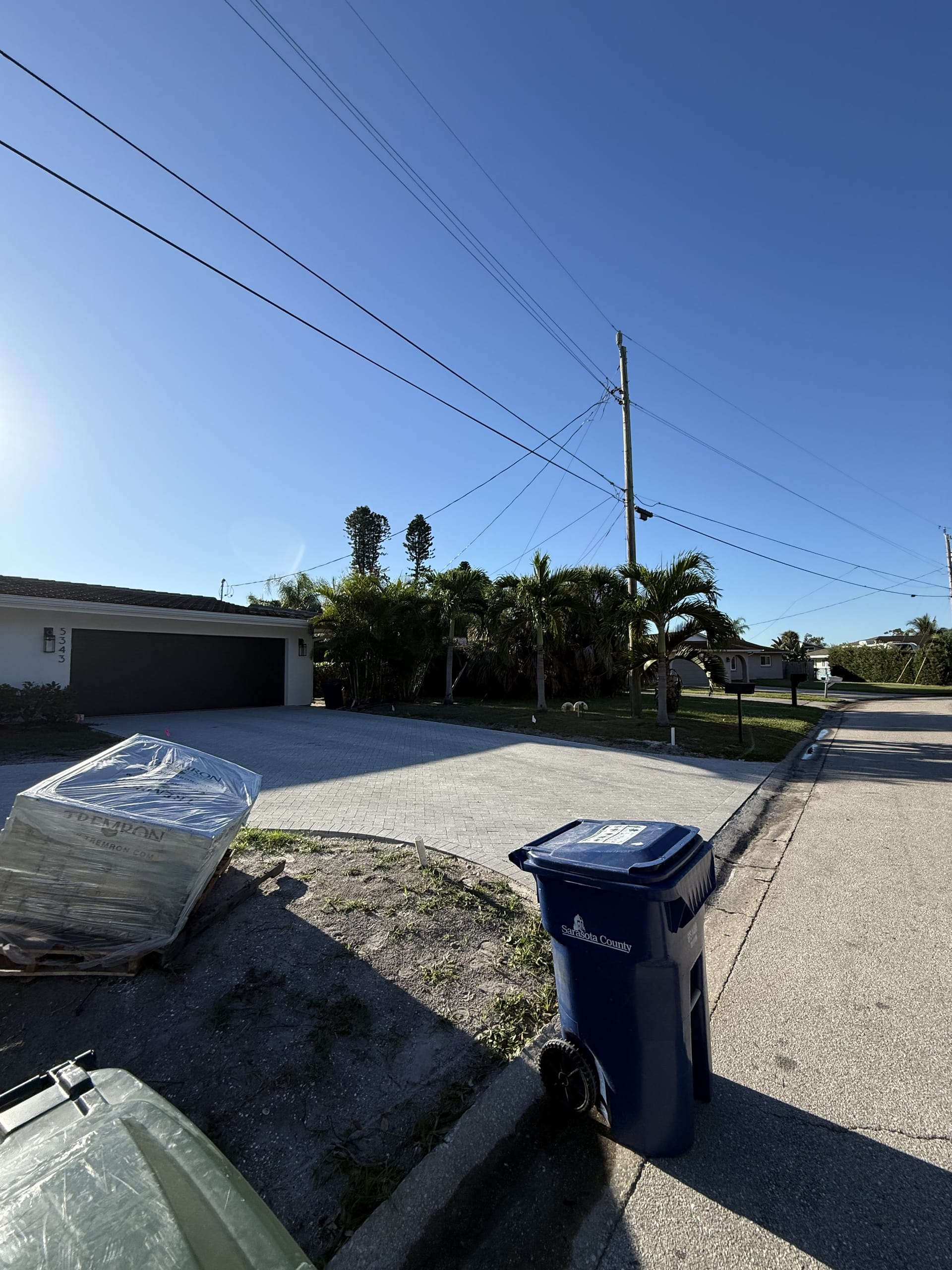
Paver driveways have exploded across Sarasota for good reason: they handle our climate better than poured concrete, they don't crack into ugly slabs when the ground moves, and a single paver can be lifted and replaced if it's ever damaged. But "pavers don't fail" is only half true. Driveways fail — and almost always for the same handful of reasons, none of which are visible on installation day.
The base is everything
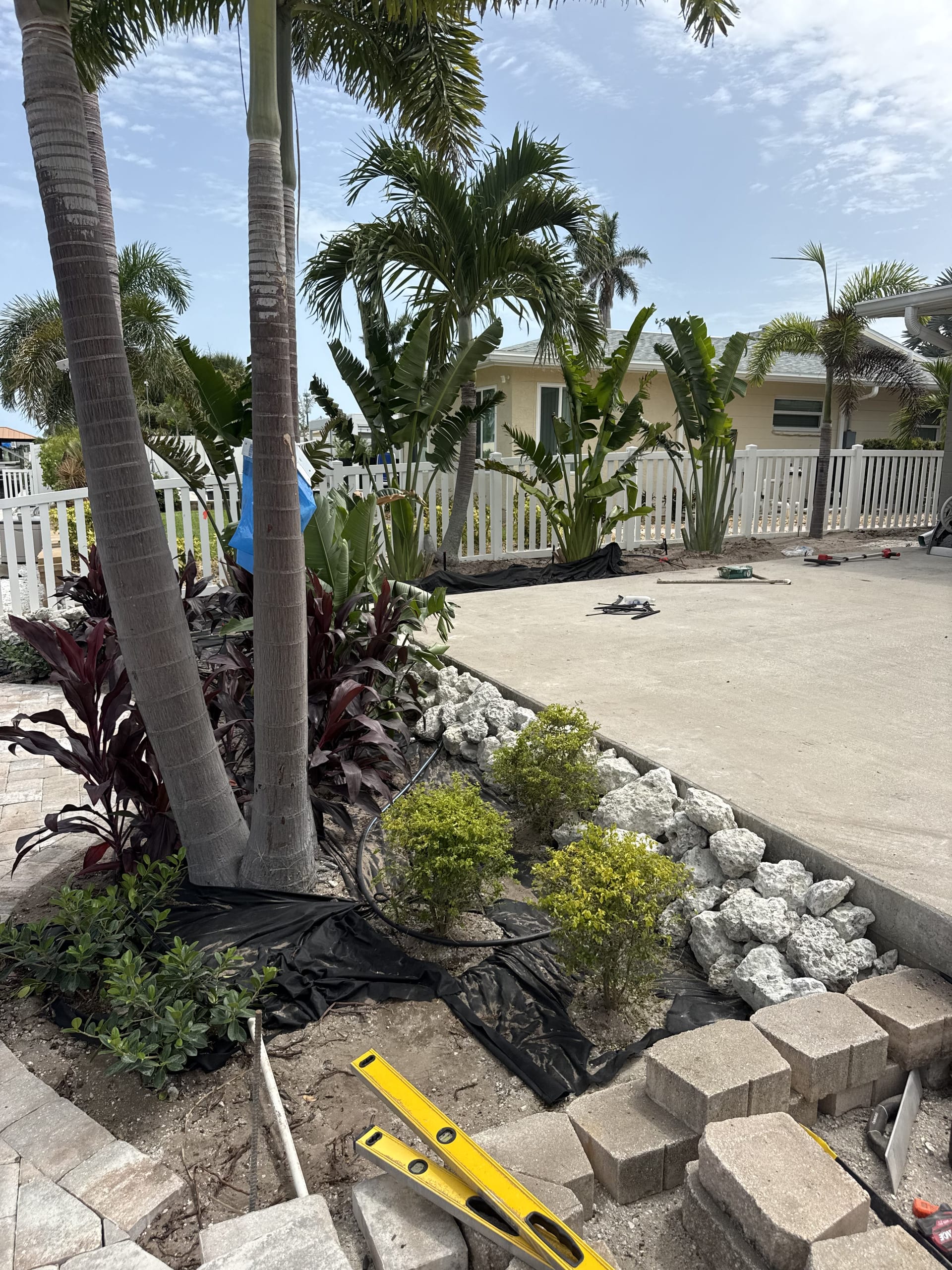
What you see — the pavers — is about the top 10% of the structure. Everything below decides whether the driveway is flat in ten years or full of birdbaths and ruts. In coastal Florida that means excavating soft organics and unstable fill, then building up a compacted limerock base engineered for vehicle loads, not just foot traffic. A driveway base and a patio base are not the same thing, and the difference shows up the first time an SUV parks in the same spot every day for a year.
Compaction happens in lifts — thin layers, each compacted fully before the next goes down. Skip that and the base settles unevenly under the pavers no matter how perfect the surface looked on day one.
Edges and joints: the quiet heroes
Pavers are individual units; the system only works when they're locked together. A rigid edge restraint around the entire perimeter keeps the field from creeping apart, and polymeric sand swept into the joints locks each paver to its neighbors while still letting water drain through. When a driveway starts to spread or sprout weeds, nine times out of ten the edge restraint failed or the joint sand washed out — both cheap to do right, expensive to fix later.
Water has to go somewhere
Florida's afternoon storms dump an astonishing amount of water in twenty minutes. A driveway that sheds it all toward the garage or the neighbor's lot is a problem waiting for a rainy season. We grade paver driveways so water sheets toward pervious areas, and on tight sites we build in a drain or a permeable band that swallows the runoff. One of the quiet bonuses of pavers: the joints themselves drain, which poured concrete can't do.
Sealing: yes, but not obsessively
A quality sealer deepens paver color, hardens the joint sand, and makes oil and rust stains far easier to lift. It also isn't an annual tax. In our climate a reseal every two to three years is plenty for most driveways — more often and you're just paying to build up film. Clean gently, seal on a dry stretch, and stay off it for a day.
What a good driveway costs — and lasts
Pricing varies with the paver line, the amount of excavation the site needs, and how much of the old driveway has to come out. What we tell every client: compare the base spec, not just the paver price. A properly built paver driveway over a correct base routinely outlasts the mortgage, and individual pavers can be pulled and reset if a pipe ever needs reaching. Try that with a slab of concrete.
Thinking about pavers for your home?
We install paver driveways, walkways, patios, and fire pits across Sarasota — with the base work done right the first time.
Request a Quote