Landscape Lighting That Makes a Waterfront Property Glow
Your landscape shouldn't disappear at sunset. Low-voltage lighting design is about what you illuminate — and what you leave in the dark. Here's how we light palms, paths, and shorelines.
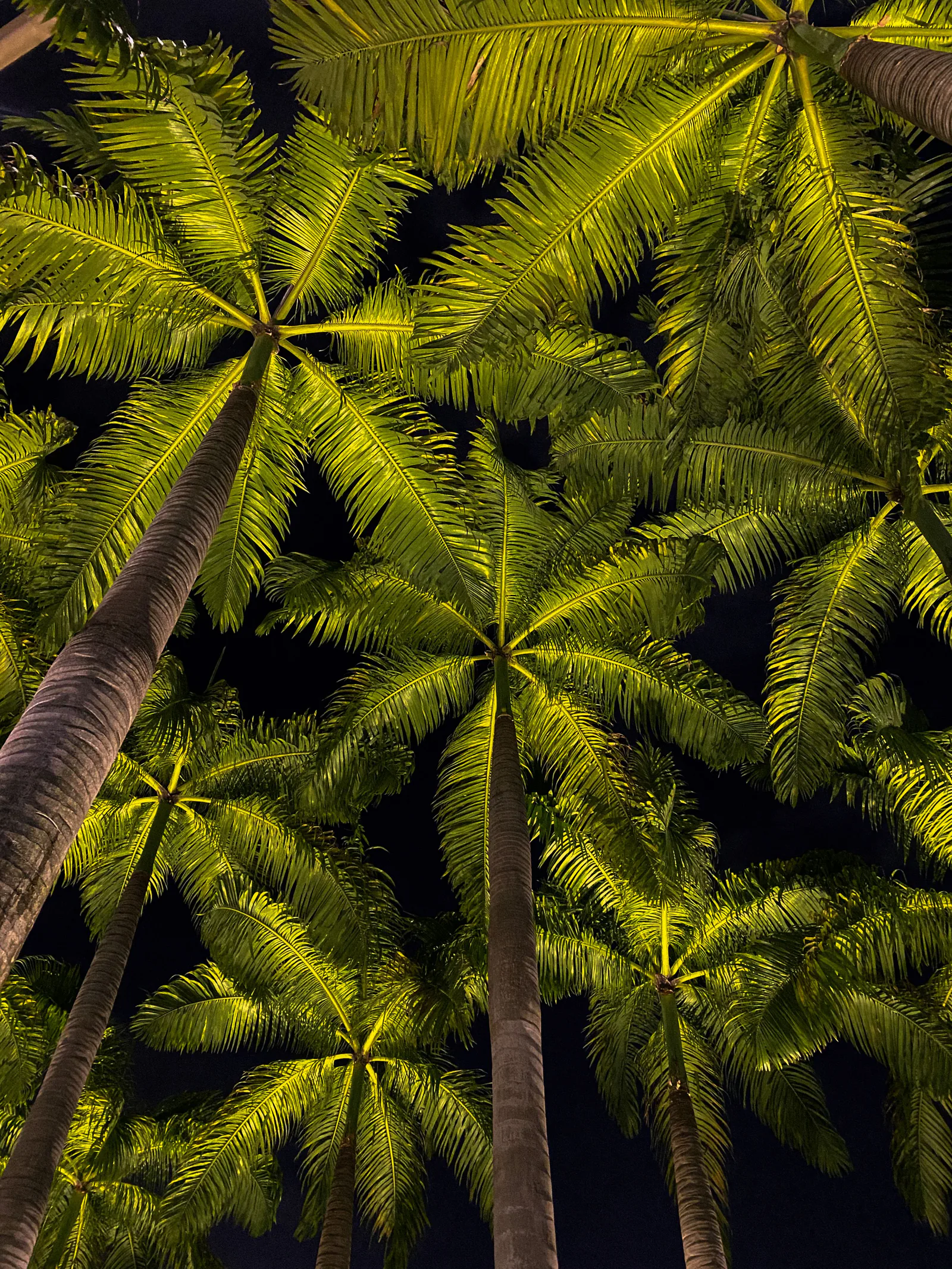
The best compliment a lighting job can get isn't "wow, look at those lights." It's "I never noticed the house looked like that at night." Good landscape lighting is invisible as technology and visible only as effect — a glowing palm here, a pool of light on a path there, a facade that finally shows its texture after dark.
Uplight the palms, not the whole yard
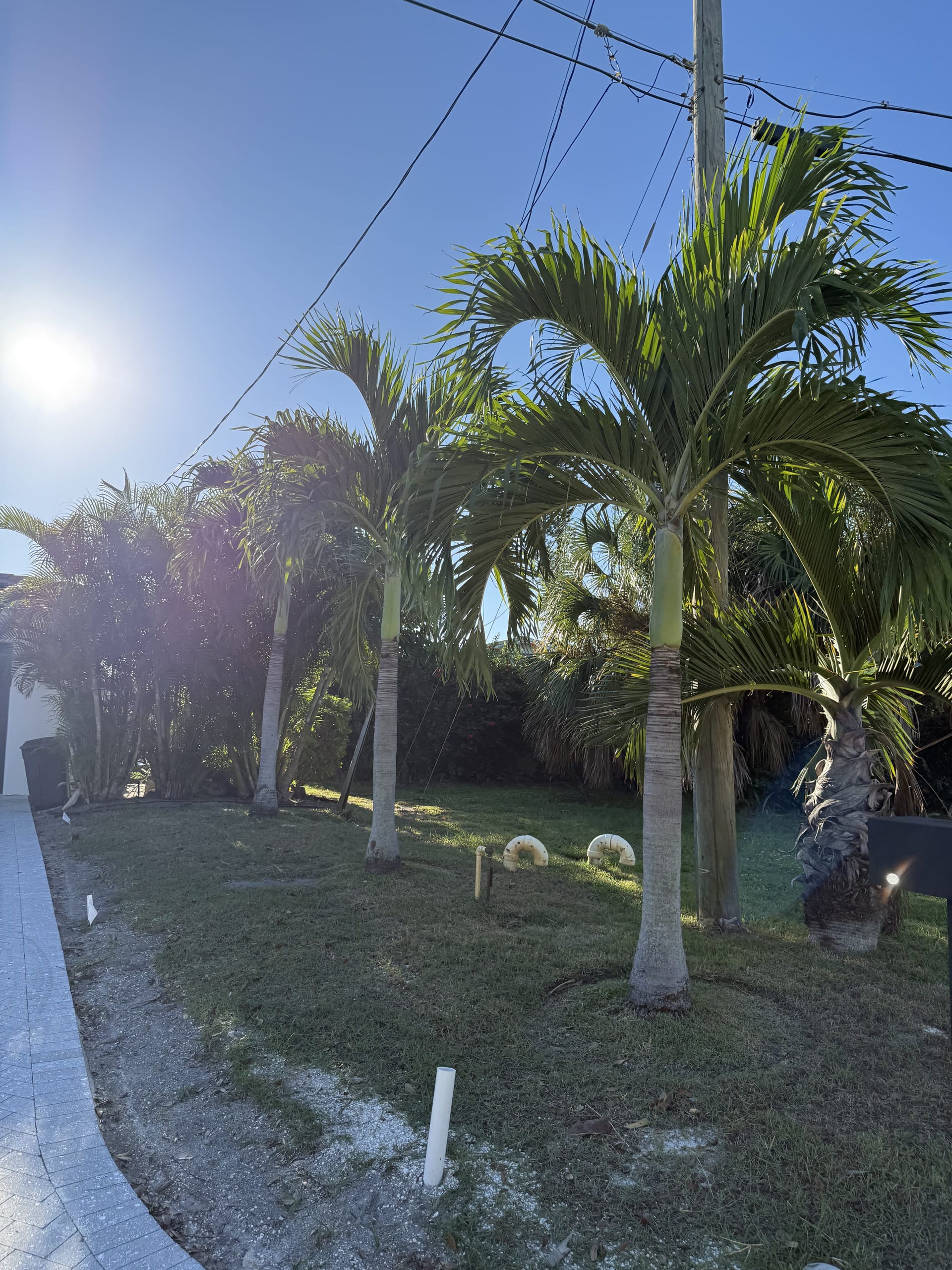
Palms are the single highest-impact target on any Sarasota property. A well-placed uplight at the base of a foxtail or Sylvester palm turns the trunk and crown into a living lantern, and three lit palms will carry an entire front elevation. The mistake is even coverage — lighting everything equally so nothing has depth. We light fewer objects, more dramatically, and let the dark spaces give the lit ones contrast.
Paths: light the way, not the face
Path lights exist for safety, but the classic error is lining a walkway like an airport runway. Fixtures should sit low, off to the side, and staggered so pools of light overlap on the walking surface — never shining up into anyone's eyes. On waterfront properties, we keep path light output warm and modest so the eye stays adapted to the dark and the water view stays the star.
Warm color, always
Color temperature makes or breaks outdoor lighting. Cool white (anything north of 4000K) reads clinical and flattens foliage; warm white in the 2700–3000K range makes stonework glow and turns greenery deep and rich instead of gray. It's the difference between a resort and a parking lot, and it costs exactly the same.
Living on the water: light with restraint
Waterfront lighting has neighbors — across the canal and in the dunes. Bright, unshielded fixtures spill onto the water and can disorient sea turtles during nesting season, which runs May through October on Florida's Gulf Coast. We use shielded, downward-facing fixtures near shorelines and keep lumen output honest. The result is a property that looks elegant from a boat, not blinding.
Low voltage, low headaches
Modern low-voltage LED systems run on a transformer the size of a shoebox, sip electricity, and last for years without a bulb change. The design work is in the transformer sizing and wire runs — sizing for what you'll add later, not just what goes in the ground today. Every system we install leaves room to grow, because nobody stops at three lights.
Ready to see your property after dark?
We design and install low-voltage landscape lighting across Sarasota — lit paths, glowing palms, and fountains that shine after sunset.
Request a Quote